

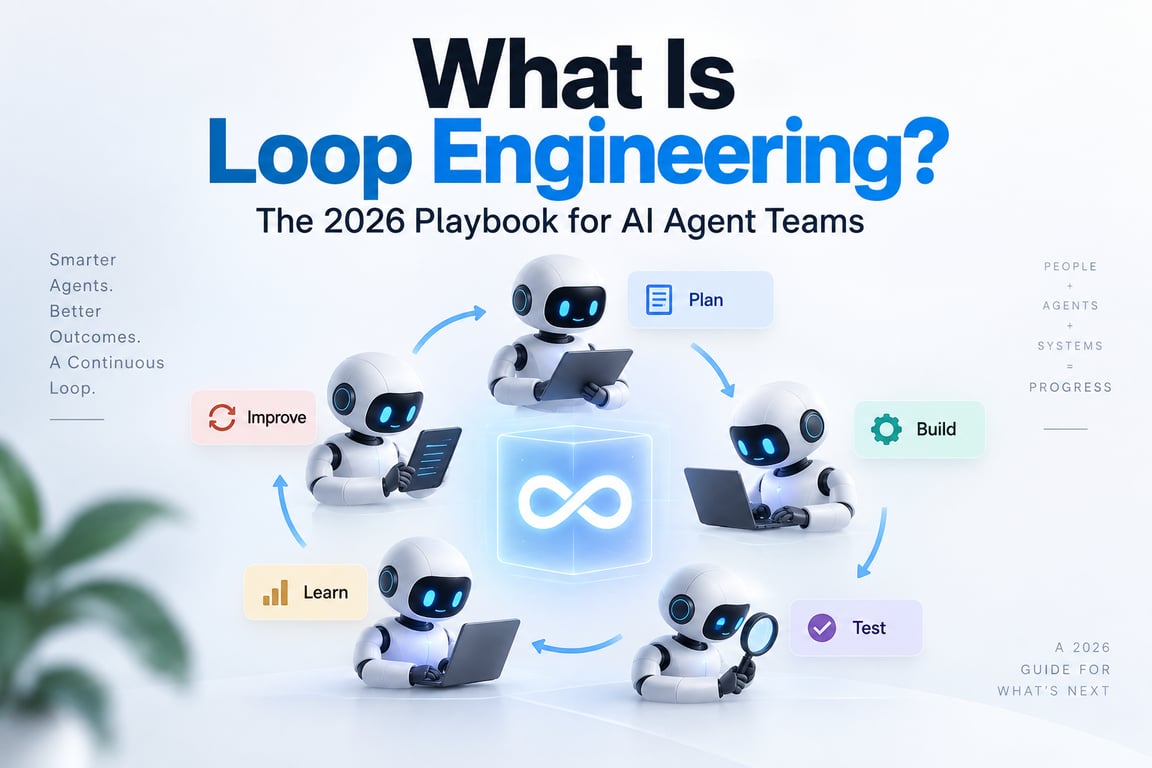
What Is Loop Engineering? The 2026 Playbook for AI Agent Teams
Learn how loop engineering turns AI agents into bounded, verifiable systems using goals, tools, memory, evals, stop rules, and human oversight.
AI Agent Optimization
Showing 13 of 14 articlesPrompt Engineering That Actually Works: Clear Goals, Context, Examples, Constraints, and Evals
Prompt engineering that works is mostly clear task design: define the goal, provide relevant context, state hard constraints and desired output, use representative examples, ground source-based tasks, define missing-information behavior, keep agent tool/mutation rules explicit, and test prompts with eval cases.
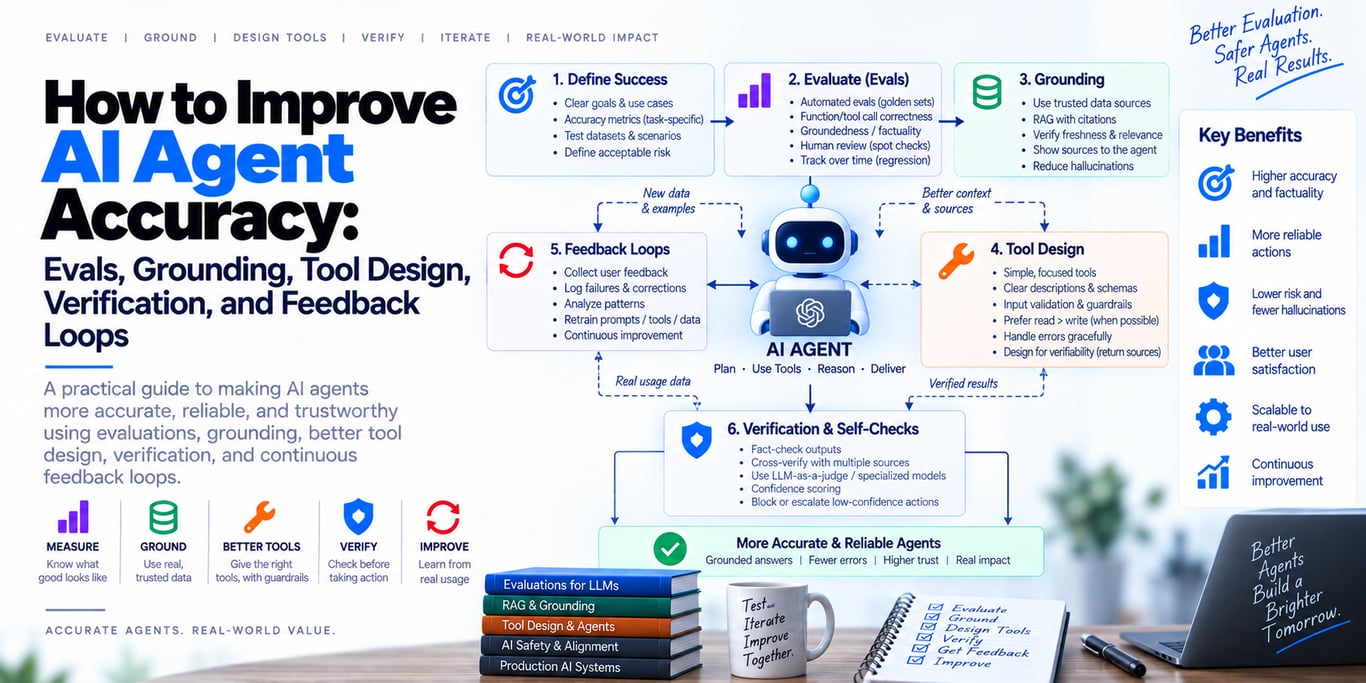
How to Improve AI Agent Accuracy: Evals, Grounding, Tool Design, Verification, and Feedback Loops
A production guide to improving AI agent accuracy by separating reasoning, retrieval, tool use, and workflow failures; building eval datasets; improving context and tools; grounding responses; verifying side effects; using retries and feedback loops carefully; and measuring end-to-end task success.
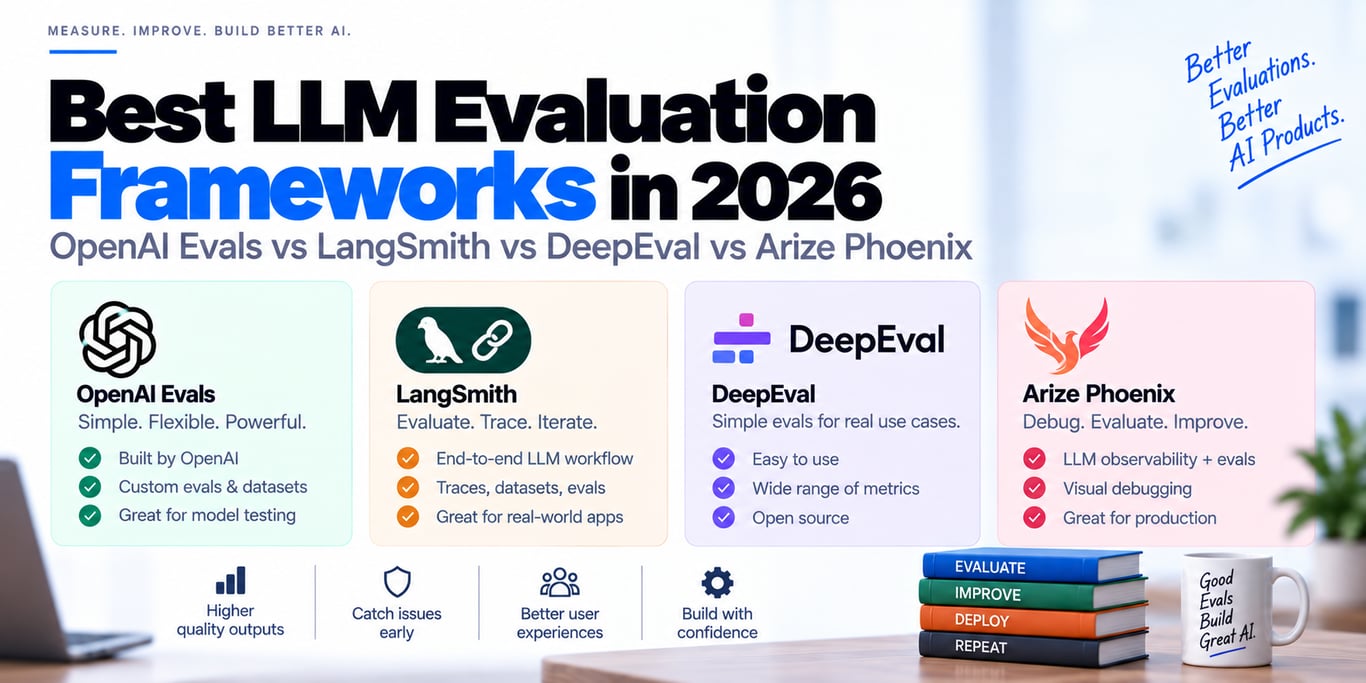
Best LLM Evaluation Frameworks in 2026: OpenAI Evals vs LangSmith vs DeepEval vs Arize Phoenix
A practical 2026 guide to evaluating LLM apps and AI agents with OpenAI Evals, LangSmith, DeepEval, and Arize Phoenix—covering datasets, deterministic graders, LLM-as-a-judge, RAG metrics, tool-use and trajectory evals, CI regression testing, experiments, and production feedback loops.
Context Management for AI Agents: Retrieval, Memory, Compaction, Tool Results, and Long-Running Sessions
Design reliable AI-agent context with scoped retrieval, fresh authoritative tool results, memory, tool search, external artifact storage, structured progress state, milestone-based compaction, mutation/version guards, provenance and context-specific evals.
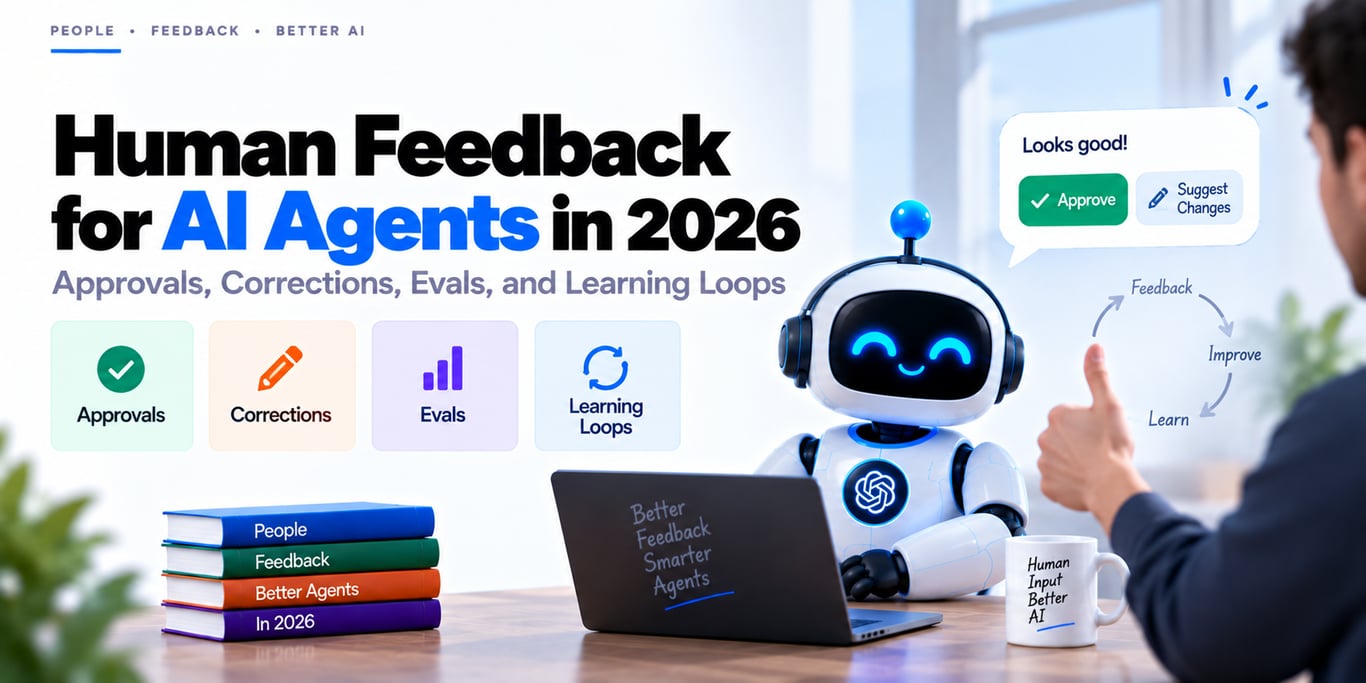
Human Feedback for AI Agents in 2026: Approvals, Corrections, Evals, and Learning Loops
A practical guide to using human feedback in AI agents: approvals, corrections, ratings, escalations, expert review, LLM-grader calibration, regression cases, preference data, privacy, and safe learning loops.
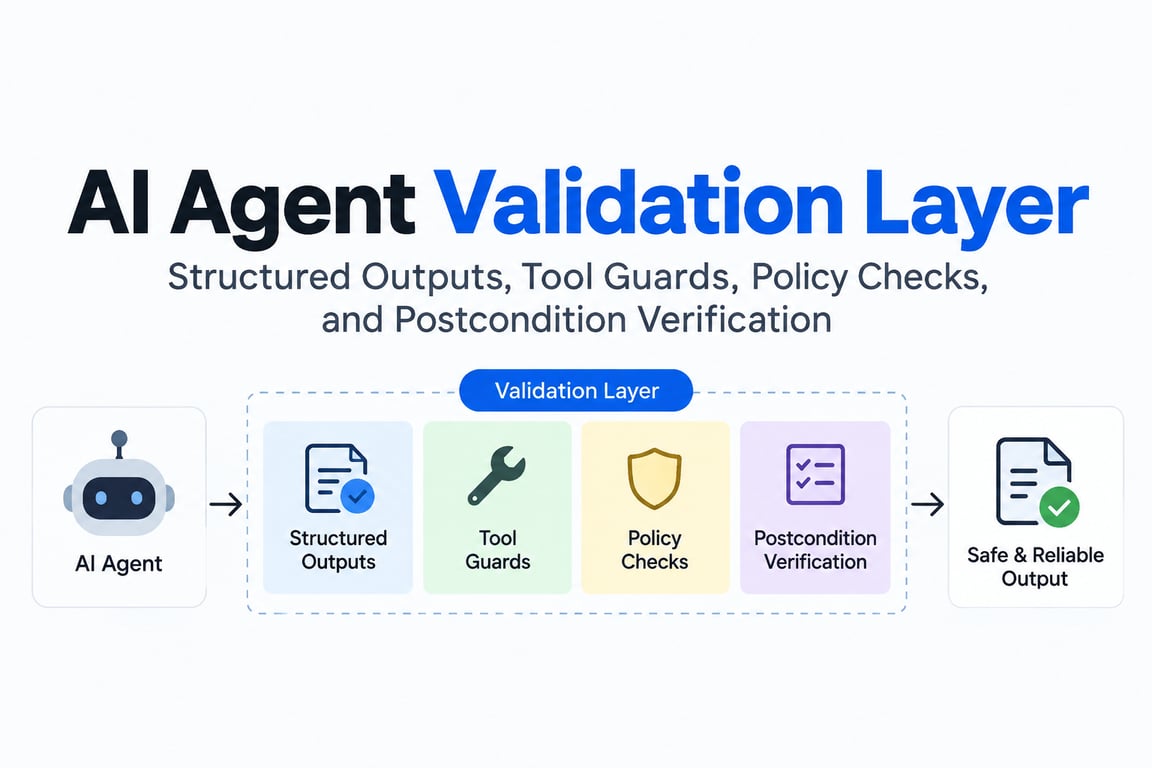
AI Agent Validation Layer: Structured Outputs, Tool Guards, Policy Checks, and Postcondition Verification
A production guide to validation layers for AI agents: input checks, structured outputs, tool argument validation, authorization, business rules, approvals, tool-result validation, idempotency, postcondition verification, memory/subagent checks, and final-output guardrails.
How to Increase AI Agent Accuracy
Discover everything you need to know about How to Increase AI Agent Accuracy in our latest comprehensive guide.
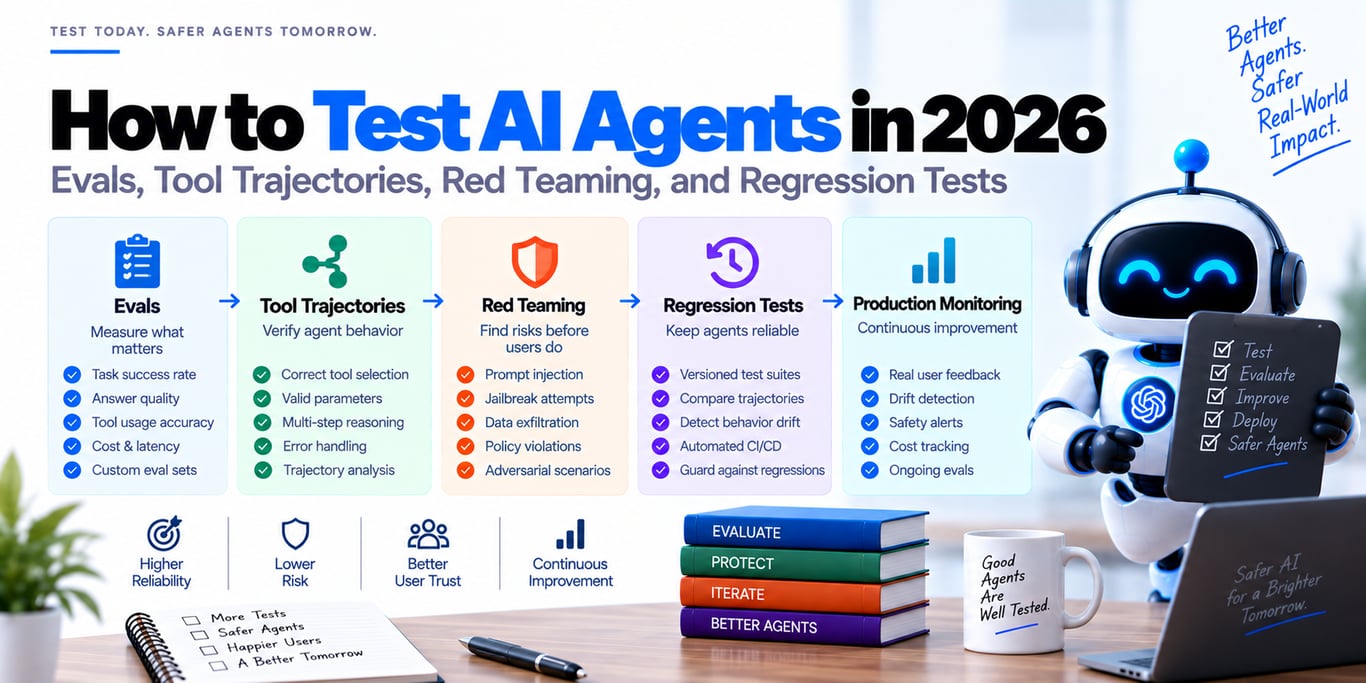
How to Test AI Agents in 2026: Evals, Tool Trajectories, Red Teaming, and Regression Tests
A production testing methodology for AI agents and LLM applications: deterministic contract tests, retrieval and tool component evals, end-to-end task trials, trajectory checks, repeated runs for nondeterminism, adversarial testing, dependency failure injection, human calibration, regression gates, canaries, and production feedback loops.

Better Context
Discover everything you need to know about Better Context in our latest comprehensive guide.

Prompt Engineering for AI Agents: Tools, Autonomy, Safety, Progress, and Long-Running Workflows
Prompting AI agents requires more than chatbot instructions. Define task/action mode, allowed scope, hard invariants, tool policy, least-privilege permissions, prompt-injection boundaries, mutation preconditions, autonomy by risk, durable progress state, subagent scopes, verification and stop conditions.
Response Optimization
Discover everything you need to know about Response Optimization in our latest comprehensive guide.

AI Agent Response Optimization: Quality, Grounding, Tool Context, Evals, Latency, and Token Efficiency
Optimize AI-agent responses as a full system: clear output contracts, relevant context, better retrieval/tool responses, grounding, current data, structured outputs, safe mutation verification, evals, latency/token budgets, compaction, stopping rules, and honest uncertainty.