

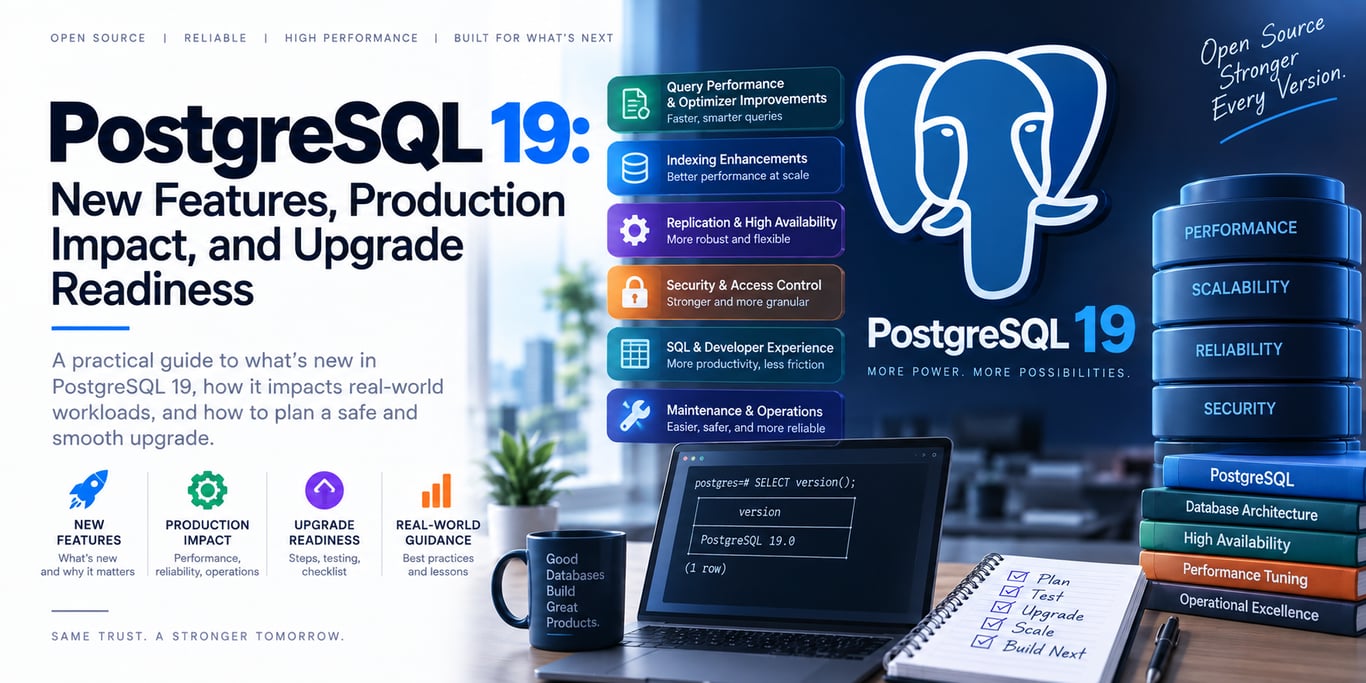
PostgreSQL 19: New Features, Production Impact, and Upgrade Readiness
PostgreSQL 19 brings REPACK CONCURRENTLY, WAIT FOR LSN, parallel autovacuum, sequence replication, partition merge/split, SQL/PGQ graph queries, and temporal DML. Here is what actually matters for production teams and how to prepare for the upgrade while PostgreSQL 19 is still in beta.
Databases
Showing 13 of 24 articles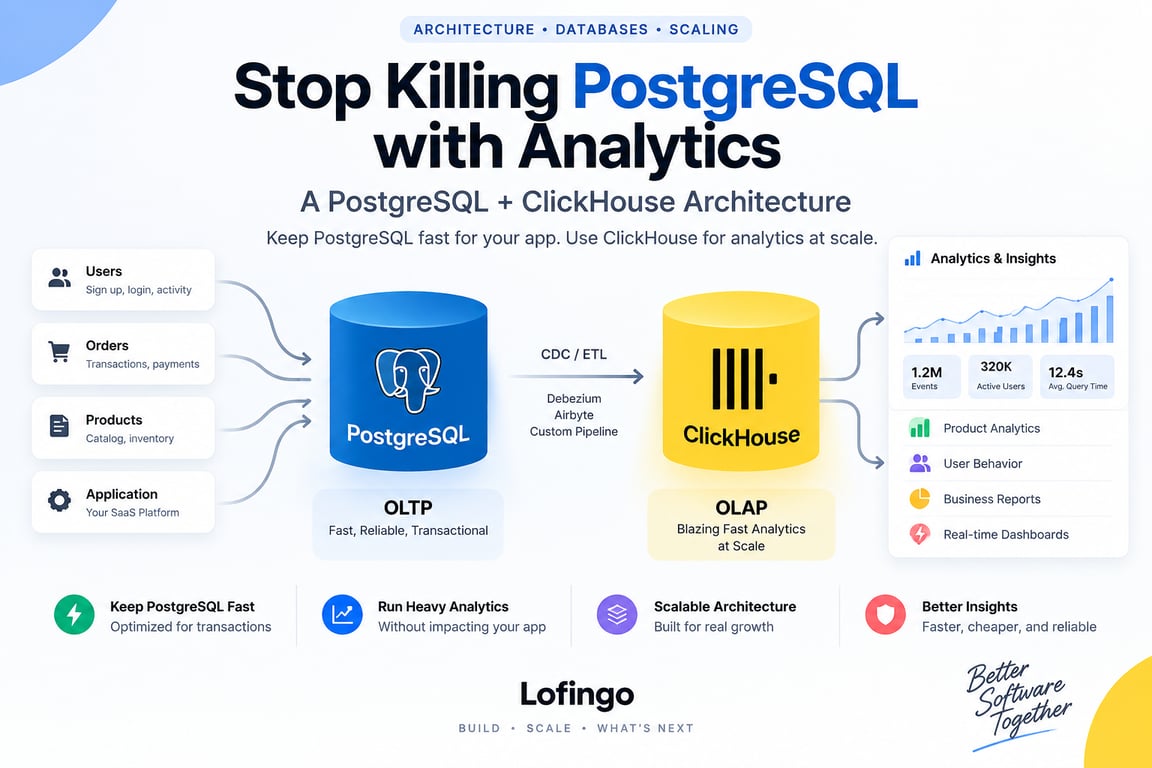
Stop Killing PostgreSQL with Analytics: A PostgreSQL + ClickHouse Architecture
PostgreSQL is a great transactional database, but heavy dashboards and analytical scans can eventually compete with production traffic. This guide explains when PostgreSQL is still enough, when ClickHouse helps, how CDC connects the two, and how to migrate without unnecessary complexity.
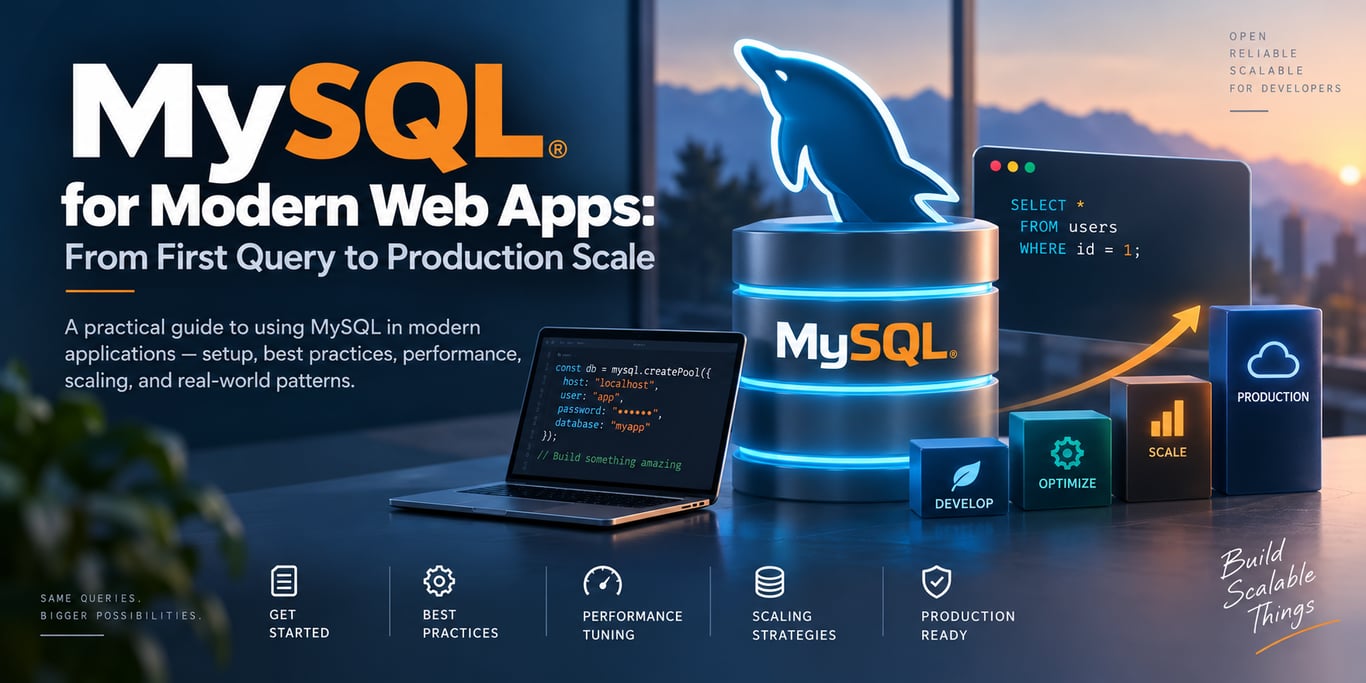
MySQL for Modern Web Apps: From First Query to Production Scale
A practical guide to building production-ready MySQL web applications with better schema design, indexes, transactions, connection pooling, query optimization, security, replicas, backups, and scaling.
AWS Managed Databases: How to Choose RDS, Aurora, DynamoDB, DocumentDB, and More
Choose the right AWS managed database by workload, not brand: compare RDS and Aurora for relational data with DynamoDB, DocumentDB, ElastiCache, MemoryDB, Neptune, Keyspaces, and Timestream for purpose-built access patterns.
Scaling Database Writes: Throughput, Contention, Batching, and When to Shard
Scale database writes by finding the real bottleneck first: commit/WAL cost, indexes, hot rows, lock contention, connection pressure, batching, asynchronous work, partitioning, and only then sharding or distributed writes.
NoSQL Databases Explained: Key-Value, Document, Wide-Column, Graph, and When to Use Each
NoSQL is a family of database models, not one technology. Compare key-value, document, wide-column, graph, time-series, and in-memory systems by access patterns, consistency, transactions, indexing, partitioning, and operational trade-offs.
Scaling PostgreSQL: Connections, Replicas, Partitioning, and the Limits of One Primary
Scale PostgreSQL in the right order: fix query work, control connection concurrency, scale the primary vertically, add replicas for reads and HA, partition large tables, separate analytics, use logical replication for data movement, and shard only when one write owner is truly the limit.
Database Replication Explained: Physical vs Logical, Sync vs Async, Lag, and Failover
Understand database replication from first principles: physical vs logical replication, synchronous vs asynchronous commits, lag stages, failover, split brain, retained logs, schema changes, and why replicas are not backups.
Database Table Partitioning: Range, List, Hash, Pruning, and Retention
A practical guide to database table partitioning: range, list and hash strategies, partition pruning, indexes, retention, unique constraints, tenant/time partitioning, automation, and the difference from sharding.
Read Replicas in Production: Scaling Reads Without Breaking Consistency
Use read replicas safely by designing for replication lag, read-after-write consistency, stale-read budgets, health-aware routing, security-sensitive reads, analytical isolation, and failover behavior.
Distributed Databases Explained: Shards, Replicas, Consensus, Transactions, and Trade-Offs
Understand how distributed databases combine sharding and replication with consensus, leader election, distributed transactions, data locality, rebalancing, multi-region topology, and explicit consistency trade-offs.

SQL Server in Production: Indexes, Query Store, HA, Backups, Security, and SQL Server 2025
A production-focused SQL Server guide covering indexing, execution plans, Query Store, transactions, blocking, tempdb, transaction logs, backups, Always On availability, security, editions, and current SQL Server 2025 capabilities.

Database Sharding: Choosing a Shard Key, Avoiding Hotspots, and Resharding Safely
Design database sharding around a shard key that balances load and query locality. Learn range vs hash vs directory sharding, hotspot avoidance, cross-shard costs, rebalancing, resharding, migrations, and shard-aware observability.